
A particle size analyzer is a device that measures the size distribution of particles in your sample to guarantee consistent product quality. It works by using techniques like laser diffraction, where a laser passes through dispersed particles and scattered light patterns reveal size ranges Zeta Potential test, or dynamic light scattering, which analyzes Brownian motion in submicron particles. Accurate sample preparation is essential to avoid agglomeration and contamination. Understanding these fundamentals gives you a clear foundation to explore advanced methods and applications.

The Importance of Particle Size Measurement
Although particle size may seem like a straightforward characteristic, its measurement is critical because it directly impacts the physical and chemical properties of materials you work with. Precise particle size data guarantees product consistency, allowing you to maintain uniformity across batches—an essential factor in optimizing performance and customer satisfaction. Furthermore, accurate particle size measurement supports regulatory compliance, providing documented evidence that your products meet industry standards and safety requirements. Overlooking this parameter can lead to variability in dissolution rates, stability, or reactivity, potentially compromising product efficacy Lab Alliance. By rigorously quantifying particle size, you gain control over formulation and processing variables, thereby enhancing quality assurance and minimizing risks associated with non-compliance or inconsistent product behavior. This analytical approach empowers you to innovate confidently while adhering to stringent regulatory frameworks.
Common Techniques Used in Particle Size Analysis
When it comes to determining particle size, several analytical techniques come into play, each with its own principles and applications. You can utilize surface acoustic wave sensors, which measure particle interactions by detecting changes in acoustic wave propagation on a sensor surface, providing high sensitivity for fine particle analysis. Another advanced method is x ray tomography, which delivers three-dimensional imaging of particles, enabling precise volumetric size and shape characterization without destructive sampling. These approaches complement traditional techniques by offering non-invasive, detailed insights into particle structure and distribution. By understanding the strengths of each method, you gain the freedom to select the most suitable technique tailored to your sample’s nature and measurement requirements, ensuring accurate and reliable particle size data critical for process control and quality assurance.
Laser Diffraction Method Explained
Building on the variety of particle size measurement techniques, the laser diffraction method stands out for its speed and versatility across a broad size range. When you use laser diffraction, a laser beam passes through a dispersed particle sample, and the particles scatter light at angles inversely proportional to their size. By measuring this angular light intensity distribution, you obtain a precise particle size distribution. Importantly, the analysis relies on Mie theory, which accounts for complex light scattering phenomena, including diffraction, refraction, and reflection, especially important for particles comparable to the laser wavelength. This enables you to accurately interpret scattering patterns from various materials and sizes. Laser diffraction’s non-destructive nature and rapid data acquisition make it ideal when you want freedom to analyze diverse samples efficiently without sacrificing accuracy.
Dynamic Light Scattering and Its Applications
Since particle size markedly influences material properties, dynamic light scattering (DLS) offers a powerful technique to measure submicron and nanoscale particles by analyzing fluctuations in scattered light intensity caused by Brownian motion. You’ll observe that these fluctuations are mathematically interpreted via the correlation function, which quantifies the temporal decay of intensity autocorrelations. By fitting this function, you extract the diffusion coefficient, directly linked to particle size through the Stokes-Einstein equation. DLS excels in characterizing colloids, polymers, and biological macromolecules where conventional techniques fall short. Its sensitivity to Brownian motion enables you to assess particle size distributions rapidly and non-invasively, supporting applications in pharmaceuticals, nanotechnology, and materials science. Understanding the correlation function’s role lets you appreciate how DLS transforms raw light scattering data into precise particle size information.
Preparing Samples for Particle Size Analysis
To make certain accurate particle size analysis, you need to apply precise sample collection techniques that represent the bulk material consistently. Proper dispersion methods must be employed to prevent agglomeration and achieve uniform particle distribution. Additionally, minimizing contamination risks during preparation is critical to maintain sample integrity and reliable measurement results.
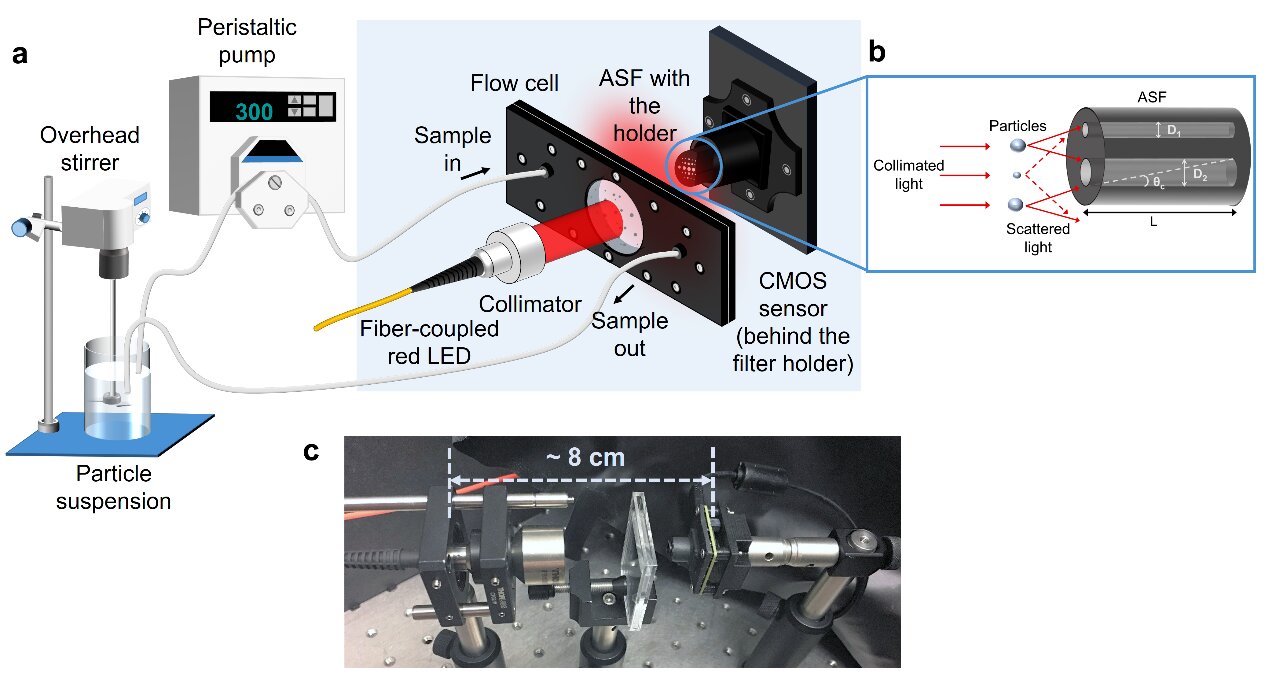
Sample Collection Techniques
When preparing samples for particle size analysis, ensuring representative collection is critical to obtaining accurate and reproducible results. You need to apply rigorous field sampling protocols that minimize bias and heterogeneity. This involves collecting multiple subsamples across the material’s spatial variability, then combining them to form a composite sample. Using automated samplers can improve consistency by standardizing collection intervals and volumes, reducing human error. Pay close attention to sample handling to prevent segregation or contamination, which could skew particle size distribution data. Whether working with powders, suspensions, or aerosols, your sample must reflect the bulk material’s characteristics precisely. By mastering these sample collection techniques, you preserve the integrity of your analysis, enabling trustworthy particle size measurements that inform sound decision-making in your applications.
Proper Dispersion Methods
Achieving accurate particle size analysis depends not only on representative sampling but also on how well you prepare your samples through dispersion. Proper dispersion guarantees individual particles are separated, preventing agglomerates that distort measurement. You can employ ultrasonic dispersion to effectively break down aggregates by applying high-frequency sound waves, which enhances sample homogeneity without altering particle integrity. Additionally, selecting appropriate chemical dispersants tailored to your sample’s composition helps stabilize the suspension by reducing inter-particle attraction, further promoting uniform dispersion. It’s essential to optimize dispersion parameters—such as sonication time and dispersant concentration—to avoid over- or under-dispersion, both of which compromise data reliability. By mastering these dispersion methods, you maintain the freedom to obtain precise, reproducible particle size distributions critical for your analytical objectives.
Avoiding Contamination Risks
Although thorough dispersion is essential, preventing contamination during sample preparation is equally important to guarantee the integrity of your particle size analysis. You must rigorously follow clean room protocols to minimize particulate interference and maintain a controlled environment. Utilizing dedicated consumables—such as single-use pipettes, sample containers, and filtration materials—prevents cross-contamination between different samples, ensuring reproducibility and accuracy. Always sterilize or pre-clean equipment before use, and handle samples with care to avoid introducing extraneous particles. Remember, even minor contamination can skew results, compromising your data’s reliability. By adhering to these stringent preparation standards, you preserve the authenticity of your measurements, empowering you to make confident, data-driven decisions free from uncertainty caused by contamination artifacts.
Interpreting and Utilizing Particle Size Data
By analyzing particle size data effectively, you can optimize processes and enhance product performance. You’ll want to employ robust data visualization techniques to interpret distributions clearly, identifying trends and anomalies that impact quality. Understanding metrics like D10, D50, and D90 enables precise control over particle size ranges, essential for consistent output. Integrating this data into your process control systems allows real-time adjustments, reducing variability and waste. You can also correlate particle size variations with functional properties, supporting informed decision-making and product development. Ultimately, leveraging particle size analysis data empowers you to maintain stringent quality standards while adapting swiftly to production demands, granting you operational freedom and competitive advantage.
Conclusion
Understanding how a particle size analyzer works is essential for accurate material characterization. By choosing the appropriate technique—whether laser diffraction for broad size ranges or dynamic light scattering for nanoparticles—you can obtain precise data tailored to your sample. Proper sample preparation guarantees reliability, while careful interpretation of results allows you to optimize processes and product quality. Ultimately, mastering particle size analysis empowers you to make informed, data-driven decisions in research and industrial applications.